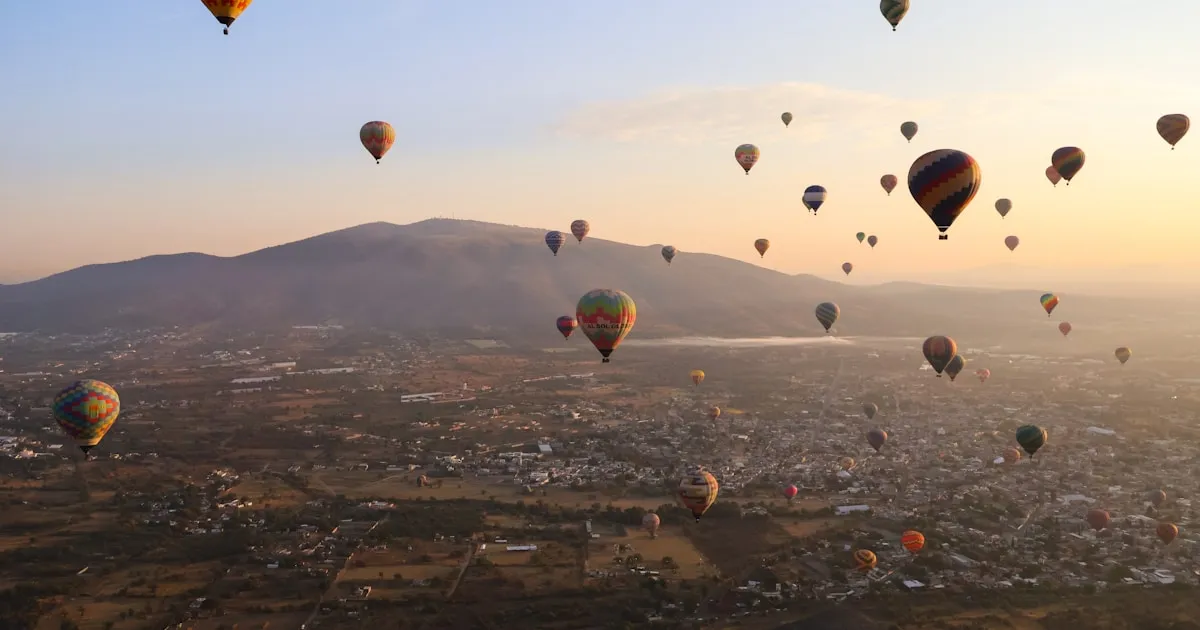
243 Years of Human Flight, and the Wonder Has Not Changed
On the morning of June 4, 1783, two brothers from a paper-making family in southern France launched a linen-and-paper globe into the sky above Annonay. It rose to roughly 2,000 metres, drifted for about ten minutes and landed in a field nearly two kilometres away. No one was on board. But everyone who watched understood that something fundamental had changed: human beings had found a way to leave the ground.
Today, when a hot air balloon lifts off from the plains outside Marrakech at dawn, the core principle is identical to what Joseph-Michel and Jacques-Etienne Montgolfier demonstrated that morning. Heated air rises. Trap enough of it inside a fabric envelope and the envelope rises too. The materials, the fuel system and the safety standards are unrecognisable compared to 1783 — but the physics, and the sense of wonder, remain exactly the same.
This is the story of how hot air ballooning evolved from a French scientific experiment into one of Morocco's most celebrated tourist experiences.
The Montgolfier Brothers and the Birth of Flight
The First Public Demonstration
The Montgolfier brothers were not scientists in the formal sense. They were industrialists who ran the family paper mill in Annonay, a small town in the Ardeche region. Joseph-Michel, the elder, had been experimenting with lightweight paper bags filled with heated air since late 1782. He noticed that paper bags floated upward when held over a fire, and he began to wonder how far the principle could scale.
The answer: dramatically far. On June 4, 1783, the brothers demonstrated a balloon roughly 10 metres in diameter, made of sackcloth lined with paper, before a crowd of local dignitaries. The balloon — unmanned — rose rapidly, stayed aloft for roughly 10 minutes and travelled approximately 1.6 kilometres before landing. The demonstration was formally witnessed and documented by the local authorities, giving it official credibility.
Word reached Paris within days. King Louis XVI took immediate interest, and the brothers were invited to repeat the demonstration at Versailles.
The First Passengers: A Sheep, a Duck and a Rooster
On September 19, 1783, at the Palace of Versailles, the Montgolfiers launched a balloon carrying the first-ever aeronauts: a sheep named Montauciel, a duck and a rooster. The flight lasted about eight minutes and reached an altitude of around 460 metres. The animals landed safely, proving that living creatures could survive at altitude. The sheep was found calmly grazing in a field. The duck was unharmed. The rooster had a minor wing injury, likely caused by the sheep stepping on it rather than anything related to the flight.
The First Manned Flight
Two months later, on November 21, 1783, Jean-Francois Pilatre de Rozier and the Marquis d'Arlandes made the first manned, untethered balloon flight in history. They launched from the grounds of the Chateau de la Muette in the Bois de Boulogne, on the western edge of Paris, and flew for approximately 25 minutes at an altitude of roughly 900 metres. They covered about 9 kilometres, landing on the Butte-aux-Cailles in what is now the 13th arrondissement.
The balloon was fuelled by a fire of straw and wool burning in an iron brazier suspended beneath the open neck of the envelope. De Rozier and d'Arlandes spent most of the flight feeding the fire and putting out small blazes that erupted on the fabric when embers drifted upward. It was, by any modern standard, extremely dangerous. But it worked. And it changed everything.
The French connection is worth noting here. France and Morocco share deep historical and cultural ties dating back centuries. French is widely spoken in Morocco, French architectural influence is visible throughout Marrakech, and France remains one of the top source countries for tourists visiting Morocco. The fact that hot air ballooning was invented in France and now thrives in Morocco is not a coincidence — it is one thread in a much longer story of cultural exchange between the two countries.
The 19th Century: From Spectacle to Strategy
Military Applications
Ballooning moved from spectacle to strategic tool remarkably quickly. The French military established the world's first balloon corps in 1794, using tethered observation balloons at the Battle of Fleurus during the French Revolutionary Wars. The elevated vantage point gave French commanders a decisive advantage in reading enemy troop movements.
The Americans followed suit during the Civil War (1861-1865). Thaddeus Lowe's Balloon Corps provided aerial reconnaissance for the Union Army, transmitting observations by telegraph wire from an altitude of over 300 metres. It was crude by modern standards, but it was the first systematic use of aerial intelligence in American warfare.
During the Franco-Prussian War of 1870-1871, balloons played a different role entirely. When the Prussian army besieged Paris, 67 manned balloons were launched from the city to carry mail, dispatches and passengers over enemy lines. Over five months, they carried approximately 2.5 million letters and 155 passengers out of the besieged capital. It was one of the most remarkable logistical improvisations in military history.
The Gentleman's Sport
By the late 19th century, ballooning had become a pursuit for wealthy adventurers and sporting clubs. The first Gordon Bennett Cup in 1906 established competitive gas ballooning as an international sport, with teams from France, Germany, Britain, Italy, Spain and the United States. Long-distance records fell regularly. The public fascination was enormous.
Ballooning also contributed to early atmospheric science. Manned ascents to extreme altitudes — some reaching over 9,000 metres, well into the zone where supplemental oxygen is needed — provided the first direct measurements of temperature, pressure and humidity at high altitude.
The Modern Era: Ed Yost and the Rebirth of Hot Air
The 1960s Revolution
By the mid-20th century, gas balloons (filled with hydrogen or helium) had largely replaced hot air designs. Gas balloons offered longer flight times and did not require a constant heat source. Hot air ballooning was considered a historical curiosity.
That changed in 1960 when Paul Edward "Ed" Yost, an American inventor and engineer, successfully flew the first modern hot air balloon from Bruning, Nebraska. Yost's design was revolutionary in three ways:
- Propane burners replaced open fires of straw and wood. Liquid propane stored in portable cylinders delivered intense, controllable heat on demand. No more feeding a brazier by hand.
- Nylon fabric replaced paper, linen and silk. Ripstop nylon was lighter, stronger, more heat-resistant and vastly more durable than any material the Montgolfiers could have imagined.
- A parachute valve at the top of the envelope gave the pilot precise control over descent by releasing hot air in a controlled manner.
These three innovations — propane fuel, synthetic fabric, mechanical venting — transformed hot air ballooning from a dangerous curiosity into a safe, practical and repeatable activity. Ed Yost is rightly known as the father of modern hot air ballooning. He went on to make the first solo balloon crossing of the English Channel in 1963.
Commercial Passenger Flights
Through the 1970s and 1980s, commercial passenger ballooning spread across Europe, the United States and Australia. Operators in the Napa Valley, the Loire Valley, the Serengeti and the English countryside began offering sunrise flights to paying guests. The format that exists today — early morning hotel pickup, pre-dawn inflation, one-hour flight, champagne or breakfast on landing — crystallised during this period.
By the 1990s, Cappadocia in central Turkey was emerging as the world's defining balloon destination. The otherworldly landscape of fairy chimneys and cave dwellings, combined with reliable weather and a growing tourism infrastructure, made it the gold standard. At its peak, over 150 balloons could be seen in the sky on a single morning. Cappadocia proved that a region could build a global tourism brand around ballooning alone.
For a detailed comparison of the two destinations, see our guide on Marrakech vs Cappadocia balloon flights.
Ballooning Comes to Morocco
The Early Years
Morocco's hot air ballooning history begins in the late 1990s and early 2000s. As Marrakech consolidated its position as one of North Africa's premier tourist destinations — driven by the riad renovation boom, low-cost airline routes from Europe and a surge in international media attention — entrepreneurs recognised that the city's surroundings offered near-perfect conditions for balloon operations.
Ciel d'Afrique was among the pioneering operators, establishing commercial balloon flights over the Marrakech region in the early 2000s. The company identified what subsequent operators have confirmed: the area north of Marrakech, around the Palmerie and the Jbilet hills, provides conditions that are difficult to match anywhere in the world.
Why the Conditions Are Ideal
Several factors converge to make Marrakech one of the most reliable balloon destinations on the planet:
- Weather consistency: Marrakech averages over 300 sunny days per year. The semi-arid climate produces calm, stable mornings with minimal cloud cover. Cancellation rates sit below 5 per cent annually — dramatically better than Cappadocia's winter rates of 30 to 40 per cent.
- Terrain: The Haouz Plain provides flat, open terrain for launches and landings. There are no power lines, tall structures or dense forests in the flight zone — hazards that complicate operations in more developed areas.
- Wind patterns: Morning winds are light and predictable, typically below 10 knots at launch time. The thermal patterns are stable, with gentle surface winds giving way to slightly faster upper-level winds that provide directional movement without turbulence.
- Altitude: Marrakech sits at approximately 450 metres above sea level — high enough to keep temperatures moderate but low enough that air density provides good lift for the balloons.
- Visual drama: The High Atlas Mountains, including Jebel Toubkal at 4,167 metres, provide a backdrop that few balloon destinations can rival. On clear mornings, the snow-capped peaks glow pink and gold in the first light.
Growth Through the 2000s and 2010s
As Marrakech's tourism infrastructure matured — with direct flights from dozens of European cities, a growing luxury hotel sector and strong word-of-mouth driven by social media — balloon operations grew steadily. New operators entered the market. Flight formats diversified to include shared flights, private charters and VIP experiences with on-board or on-ground Moroccan breakfasts.
Morocco's Direction Generale de l'Aviation Civile (DGAC) regulates all balloon operations in the country. Pilots must hold valid commercial balloon licences, aircraft must pass regular inspections, and operators must maintain insurance and safety protocols consistent with international civil aviation standards. This regulatory framework has been instrumental in maintaining safety standards as the industry has grown.
Today, multiple operators fly daily from launch sites around the Palmerie and the wider Marrakech countryside. The industry supports a local workforce of pilots, ground crew, drivers, caterers and logistics staff — a tangible economic contribution to communities outside the Marrakech medina.
To understand the full safety framework behind these flights, see our hot air balloon safety guide.
Why Marrakech Became a World-Class Ballooning Destination
Plenty of places in the world offer balloon flights. What separates the great destinations from the merely adequate ones is the combination of reliable weather, a spectacular landscape and a rich cultural context. Marrakech has all three.
The Atlas Mountains
No other major balloon destination offers a mountain range of this scale as a visual backdrop. The Atlas Mountains stretch across the entire southern horizon, and on clear mornings — which are most mornings — they dominate the view from altitude. The contrast between the arid plains below and the snow-capped peaks in the distance is striking and photogenic in a way that does not diminish with repetition.
For a complete overview of the landscapes visible during a flight, see our guide on what you see from a hot air balloon in Marrakech.
Year-Round Operations
Many balloon destinations operate seasonally. Cappadocia's winter cancellation rates make it unreliable from December through February. European destinations shut down entirely during the colder months. Marrakech flies year-round. Whether you visit in January or July, conditions are almost always flyable. This reliability makes it possible to build a trip around a balloon flight with confidence.
Competitive Pricing
Morocco's favourable economics — lower labour costs, fuel prices and operating overheads compared to Turkey or Western Europe — allow operators to offer flights at roughly half the price of comparable experiences in Cappadocia. A Classic Flight in Marrakech includes hotel pickup, an hour of flying and a full Moroccan breakfast, at a price that would barely cover the ticket alone in Cappadocia.
The Cultural Layer
This is what truly distinguishes Marrakech. A balloon flight here is not just about the view — it is embedded in a broader cultural experience. After landing, guests sit on traditional Berber carpets in the open desert and eat a breakfast of fresh bread, honey, olive oil, Moroccan pastries, fruit and mint tea. The ground crew are local Berber men who have been working the launch sites for years. The landscape below during the flight includes working farms, grazing livestock, traditional mudbrick villages and the geometric patterns of irrigated fields.
This cultural richness is what brings guests back and what drives the photos and reviews that appear on Instagram, TripAdvisor and Google. The balloon flight is the centrepiece, but the overall experience — the 4x4 ride through the desert at dawn, the inflation, the flight, the breakfast, the hospitality — is what makes it memorable.
Social Media and Global Visibility
The visual impact of a balloon flight over the Moroccan landscape has made it one of the most shared travel experiences on social media. Sunrise shots with the Atlas Mountains in the background, aerial views of the patchwork desert, close-up photos of the balloon inflation against a pink sky — these images circulate constantly on Instagram, TikTok and travel blogs, driving awareness and demand from travellers who might not have considered Morocco as a balloon destination.
The Future of Ballooning in Morocco
Growing International Demand
Morocco welcomed over 14 million tourists in 2023, a figure that has been growing year on year. As the country continues to invest in tourism infrastructure — airports, roads, hotels, digital connectivity — balloon operators are seeing increased demand from markets beyond the traditional European base, including North America, the Gulf states and East Asia.
Expansion Beyond Marrakech
While Marrakech remains the centre of Moroccan ballooning, there is growing interest in expanding operations to other regions. The edges of the Sahara Desert near Ouarzazate and Merzouga, the Middle Atlas foothills and the Draa Valley all offer landscapes that could support spectacular balloon experiences. These expansions are still in early stages, but the potential is significant.
Sustainability
Hot air ballooning is one of the more environmentally considerate forms of tourism. Propane combustion produces CO2 and water vapour but no particulates or toxic emissions. Balloons have zero ground impact — they do not require runways, roads or permanent infrastructure in the flight zone. Landings occur on open terrain with no lasting trace. As sustainable tourism becomes a higher priority for travellers and operators alike, ballooning is well-positioned.
Safety and Technology
Modern balloons benefit from ongoing improvements in materials, instrumentation and safety systems. Envelope fabrics are lighter and more heat-resistant than ever. GPS tracking, digital variometers and weather forecasting tools give pilots better situational awareness. Regulatory standards continue to tighten globally, and Morocco's DGAC keeps pace with international best practice.
For a deeper look at the engineering behind modern balloon flight, see our article on how hot air balloons work.
How Today's Flight Connects to 1783
When you stand in the pre-dawn darkness near Marrakech and watch the ground crew unroll the envelope, fire the burners and inflate 2,800 cubic metres of nylon until it towers above you, it is worth pausing to consider the chain of events that led to this moment.
The basic principle — heated air rises, and if you trap enough of it, it lifts things — is unchanged since the Montgolfiers. But every other element has been transformed:
- Fuel: An open fire of straw and wool has been replaced by precision-engineered propane burner systems producing millions of BTU of controlled heat.
- Fabric: Paper and linen have given way to ripstop nylon and polyester coated with UV-resistant silicone, capable of withstanding temperatures above 120 degrees Celsius.
- Control: Pilots who once had almost no ability to manage altitude or descent now have parachute valves, turning vents and instruments that measure altitude, climb rate and envelope temperature in real time.
- Safety: A flight that once had a meaningful chance of ending in fire or crash is now governed by civil aviation regulations, mandatory inspections, redundant systems and decades of accumulated operational knowledge.
What has not changed is the experience itself. The silence when the burner pauses. The slow rotation as the basket pivots on an invisible axis of wind. The way the landscape opens up below you — not in the dramatic rush of an aeroplane takeoff but in a gradual, almost meditative widening of the horizon. The Marquis d'Arlandes felt this in 1783 over Paris. You will feel it over Marrakech.
From History to Your Own Flight
You do not need to know the history of ballooning to enjoy a flight over Marrakech. But knowing it adds a dimension that makes the experience richer. You are not just doing a tourist activity. You are participating in the oldest form of human flight, using the same physical principle that launched two brothers into the sky over a small French town nearly two and a half centuries ago — improved in every way except the most important one, which is the pure, simple wonder of floating above the earth.
If you are ready to experience it for yourself, our Classic Flight offers the full experience — hotel pickup, one hour in the air above the Palmerie and the Atlas foothills, and a traditional Moroccan breakfast after landing. For an elevated experience, the VIP Flight includes exclusive use of the balloon and an enhanced breakfast setting.
History got you here. The flight itself will do the rest.