
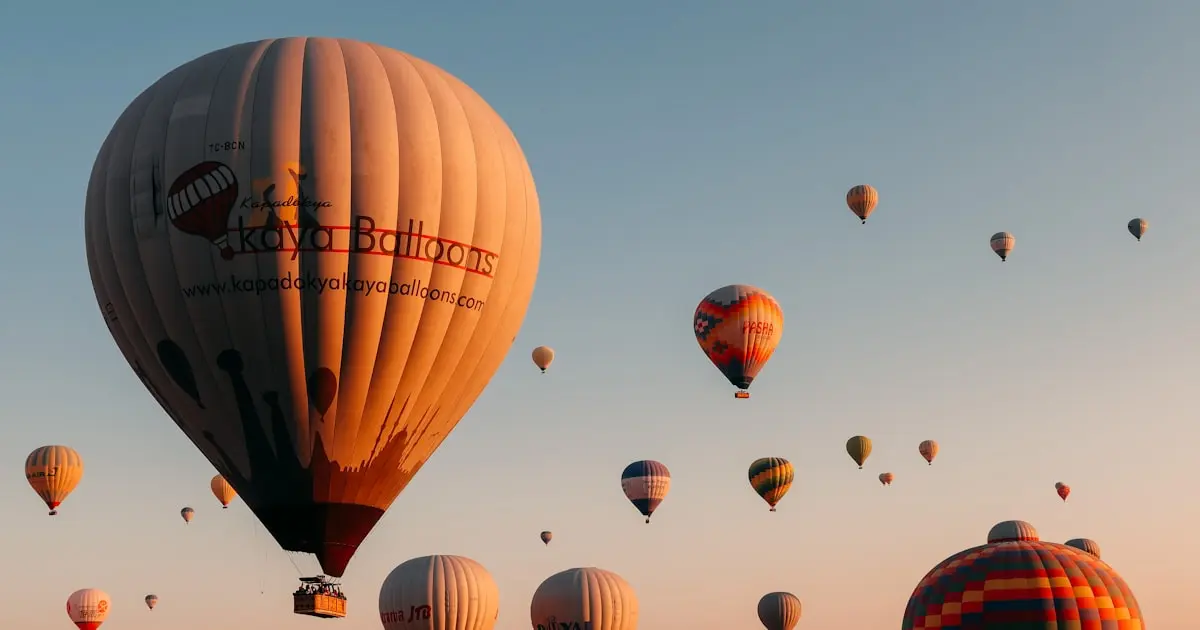
When you are considering a hot air balloon ride, it is natural to wonder about safety. A quick internet search for "hot air balloon accidents" will surface some alarming headlines. But headlines, by their nature, report the exceptional — not the typical. What do the actual statistics say about how safe hot air ballooning really is?
The short answer: remarkably safe. Hot air ballooning has one of the lowest fatality rates of any form of aviation, and the vast majority of reported incidents involve nothing more serious than a bumpy landing. Let us look at the numbers.
What the NTSB Data Shows
The National Transportation Safety Board (NTSB) in the United States maintains the most comprehensive publicly available database of balloon incidents in the world. Because the US has the largest commercial ballooning industry — with thousands of flights taking place daily during peak season — this data provides a robust picture of the risks involved.
Incident Frequency
The NTSB records an average of approximately 50 balloon-related incidents per year across the entire United States. That number might sound significant until you consider the context: an estimated 3,000 to 5,000 balloon flights take place every day during the flying season in the US alone. Over a typical year, that translates to hundreds of thousands of individual flights.
An incident rate of roughly 50 per year against that volume means the overwhelming majority of flights — well over 99.9% — proceed without any reportable event at all.
What Counts as an "Incident"
It is important to understand what the NTSB classifies as an incident. The term covers everything from a hard landing where a passenger twists an ankle to a balloon envelope brushing a tree during landing. The vast majority of reported incidents fall into these minor categories:
- Hard landings — the most common type, usually resulting in minor bruising or sprains
- Contact with obstacles during landing — fences, hedgerows, or trees
- Envelope damage — tears or burns that do not affect the safety of the flight but require repair
- Unplanned landing locations — the balloon lands safely but not where the pilot intended
These are the ballooning equivalent of a car hitting a kerb during parking. They are reportable events, but they are not the catastrophic incidents that the word "accident" conjures in most people's minds.
Fatal Incidents
Fatal balloon accidents are genuinely rare. Over the past three decades, the US has averaged approximately one to two fatal balloon incidents per year. Given the hundreds of thousands of flights conducted annually, this translates to a fatality rate that is remarkably low — lower per hour of operation than driving a car, riding a motorcycle, cycling, or even swimming.
To put this in perspective: the US Department of Transportation reports approximately 40,000 road fatalities per year. Ballooning contributes one or two. The comparison is not even close.
Fatality Rate Comparisons
When safety professionals compare the risks of different activities, they typically use fatality rates per hour of exposure or per journey. By either measure, hot air ballooning compares extremely favourably to everyday activities:
- Driving a car: approximately 1.5 fatalities per 100 million vehicle miles in the US
- Motorcycling: approximately 25 fatalities per 100 million vehicle miles — one of the highest rates for any transport mode
- Cycling: approximately 2 fatalities per 100 million miles cycled
- Commercial aviation: approximately 0.07 fatalities per billion passenger miles — extraordinarily safe
- Hot air ballooning: estimated at fewer than 0.1 fatalities per 100,000 flights — placing it among the safest forms of aviation
The drive to the balloon launch site statistically carries more risk than the flight itself. Most passengers do not think twice about the drive, yet they worry about the balloon. This is a well-documented example of risk perception bias — we fear unusual, dramatic risks far more than familiar, mundane ones, even when the familiar risks are objectively greater.
What Causes the Rare Serious Incidents?
When serious balloon accidents do occur, they almost always involve one or more of the following factors:
1. Weather-Related Incidents
The single biggest cause of serious balloon accidents is weather — specifically, flying in conditions that should have grounded the flight. This includes:
- Unexpected wind shifts during flight
- Flying too close to thunderstorms or in deteriorating weather
- Ignoring weather forecasts or pushing beyond safe limits due to commercial pressure
This is precisely why reputable operators have strict weather cancellation policies and why balloon flights take place during the calm morning window when conditions are most stable. Our article on whether balloons can fly in rain explains the weather-related decision-making process in detail.
2. Power Line Contact
Contact with overhead power lines is the second most common cause of serious balloon incidents. Power lines are difficult to see from the air, especially in the early morning light, and contact can result in electrocution or fire.
Experienced pilots mitigate this risk through careful route planning, thorough knowledge of the local area, and constant visual scanning during the descent phase. Modern pre-flight briefings specifically address the locations of power lines near potential landing sites.
3. Pilot Error or Inexperience
As with any form of aviation, pilot competence is a critical safety factor. Incidents linked to pilot error typically involve:
- Attempting to fly in marginal weather conditions
- Poor landing site selection
- Inadequate passenger briefing before landing
- Insufficient experience for the conditions encountered
This is one of the strongest arguments for choosing an established, licensed operator with experienced pilots rather than selecting the cheapest option available.
Major Incidents and Their Impact on Safety
Two incidents in recent history had a significant impact on ballooning regulations worldwide:
Luxor, Egypt (2013)
In February 2013, a balloon carrying tourists caught fire near Luxor, killing 19 of the 21 people on board. The investigation found that the balloon made contact with a mooring line during landing, which caused a tear in the envelope and a subsequent fire when the gas cylinders were damaged. The incident led to a comprehensive overhaul of Egypt's balloon safety regulations, including mandatory pilot training standards, equipment inspections, and operational procedures.
Lockhart, Texas (2016)
In July 2016, a balloon carrying 16 people struck power lines near Lockhart, Texas, killing everyone on board. The NTSB investigation found that the pilot had a history of impairment issues and should not have been flying. This incident was a major catalyst for the passage of the FAA Reauthorization Act of 2018, which for the first time required commercial balloon pilots to hold medical certificates — bringing them in line with other commercial pilots.
Both tragedies resulted in meaningful regulatory improvements — tighter standards, medical requirements for pilots, and industry-wide safety changes. The broader trend is positive: despite a steady increase in flights worldwide, the rate of serious incidents has remained stable or declined.
How to Minimise Your Personal Risk
While the overall statistics are reassuring, you can take practical steps to ensure you are flying with the safest possible operator:
- Choose a licensed, established operator with years of experience and a visible track record. Read passenger reviews for real indicators of quality.
- Ask about the pilot's experience. Commercial balloon pilots typically have hundreds or thousands of flight hours. Do not be afraid to ask.
Check the Weather Policy
Any operator who flies in marginal weather or seems reluctant to cancel when conditions are poor is a red flag. The best operators are the ones most willing to cancel — because they prioritise safety over revenue. Our guide on balloon safety in Marrakech covers what to look for in detail.
Listen to the Safety Briefing
Before every flight, the pilot or crew will deliver a safety briefing covering the landing position, how to hold onto the basket handles, and what to expect during descent. Pay attention. The landing is the phase of flight where the vast majority of minor incidents occur, and proper passenger positioning makes a significant difference.
Do Not Choose on Price Alone
The cheapest balloon ride is not necessarily the best value. Safety equipment, experienced pilots, well-maintained balloons, adequate insurance, and proper ground crew all cost money. An operator who significantly undercuts the competition may be cutting corners in areas that matter.
The Morocco Safety Record
Morocco has a well-established commercial ballooning industry, particularly around Marrakech. Operators flying over the Moroccan landscape benefit from several natural safety advantages:
- Predictable weather patterns — the semi-arid climate provides reliable, stable flying conditions during the morning window
- Flat, open terrain — the plains around Marrakech offer abundant safe landing sites with minimal obstacles
- Limited power line density — the rural areas where balloons operate have far fewer overhead cables than urban or suburban environments
- Experienced local pilots — many Marrakech balloon pilots have thousands of hours of experience flying the same routes in familiar conditions
These factors, combined with the regulatory oversight of the Moroccan aviation authority, contribute to a strong safety record for ballooning in the region.
The Bottom Line
The statistics are clear: hot air ballooning is one of the safest forms of aviation and one of the safest adventure activities available to tourists. The rare serious incidents that do occur are almost always linked to weather decisions, power lines, or pilot error — all factors that a reputable operator actively manages and mitigates.
You are statistically at greater risk during the drive to the launch site than during the flight itself.
Ready to Fly with Confidence?
Understanding the safety statistics is empowering. You can book your balloon ride knowing that the numbers are firmly in your favour, especially when you choose an experienced, safety-focused operator.
A sunrise flight over Marrakech is one of the most rewarding experiences you can have in Morocco. Read our complete safety guide to learn more about what makes Marrakech ballooning safe, and check the schedule to find your perfect flight date.
Planning your morning? See what a hot air balloon ride Marrakech actually includes before you book.