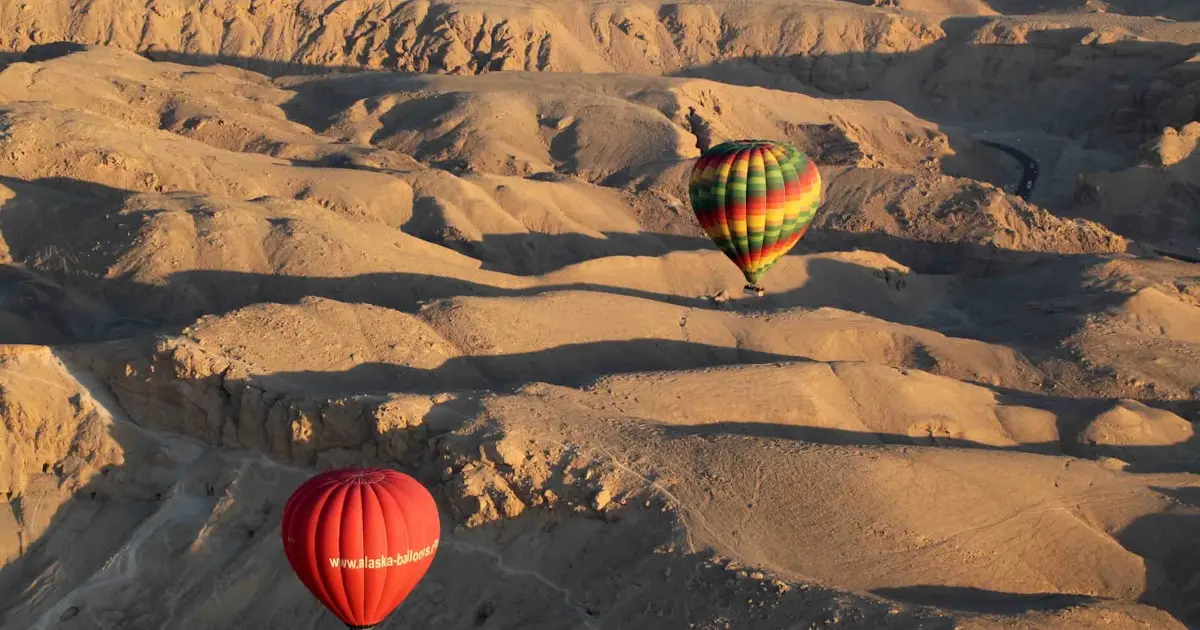
For many first-time passengers, the landing is the part of a hot air balloon flight that generates the most curiosity — and, if we are being honest, a touch of apprehension. After all, you are in a wicker basket suspended beneath a giant fabric balloon with no wheels, no brakes, and no runway. How exactly do you come back down to earth?
The good news is that balloon landings are a well-practised, carefully managed process. Pilots train extensively for this phase of flight, and the combination of modern equipment, ground crew support, and proven technique makes balloon landings far more controlled than most people imagine. Let us walk through exactly how it works.
The Parachute Valve: Your Way Down
The primary mechanism for descending in a hot air balloon is the parachute valve, also known as the deflation panel or rip panel. This is a large circular opening at the very top of the envelope — the crown — covered by a disc of fabric that sits in place like a lid.
The pilot controls the parachute valve via a cord that runs from the crown all the way down to the basket. When the pilot pulls the cord, the valve opens and hot air escapes from the top of the envelope. Since hot air is what provides the balloon's lift, releasing it causes the balloon to descend.
The beauty of this system is its proportionality. A brief, gentle pull releases a small amount of hot air, producing a gradual descent. A longer or more forceful pull releases more air for a faster descent. The pilot can also fire the burner to slow or arrest the descent at any point. This gives pilots fine-grained control over their rate of descent — typically maintained at a comfortable 1 to 3 metres per second during the approach.
For a full overview of the mechanical systems involved, including the burner and valve, see our guide on how hot air balloons work.
Reading the Landing Zone
A balloon pilot does not have the luxury of a predetermined runway. The landing site is determined during the flight itself, based on the wind direction, the terrain below, and the available options. Beginning roughly 10 to 15 minutes before the intended landing, the pilot starts actively evaluating potential sites.
What Makes a Good Landing Site?
The ideal landing site has several characteristics:
- Open and flat: Large fields, meadows, or desert areas are preferred. The pilot needs enough space for the balloon to touch down and potentially drag forward for a short distance before stopping.
- Free of obstacles: Power lines are the primary hazard. Trees, fences, buildings, and other structures also need to be avoided. The pilot will visually scan the approach path for any wires or cables — these can be extremely difficult to spot from the air.
- Accessible by road: The chase crew needs to reach the landing site with a vehicle and trailer to pack up the balloon. A site in the middle of an inaccessible field, no matter how flat and clear, creates logistical problems.
- Away from livestock: Landing a balloon near animals — particularly horses — can cause panic and injury. Responsible pilots steer well clear of livestock.
On the open plains north of Marrakech, finding suitable landing sites is relatively straightforward. The terrain is open, flat, and largely free of obstacles. The red-earth ground provides firm footing, and the sparse vegetation means excellent visibility in all directions. This is one of the reasons the Marrakech region is considered one of the best ballooning destinations in the world.
The Chase Crew
While the pilot manages the balloon from the air, the chase crew plays an equally critical role on the ground. This dedicated team follows the balloon throughout the flight in a vehicle equipped with a trailer for transporting the deflated balloon and basket.
GPS and Radio Coordination
The chase crew tracks the balloon's position via GPS, watching its track on a mapping display. They also maintain regular radio contact with the pilot, who communicates their altitude, speed, general intentions, and eventually the specific location of the chosen landing site.
As the balloon begins its descent, the crew positions themselves as close to the anticipated landing site as road access allows. In many cases, they arrive before the balloon does, ready to assist the moment the basket touches down.
Ground Assistance
When the balloon lands, the chase crew's first job is to help stabilise the basket and assist passengers in disembarking. They then help the pilot deflate the envelope fully, detach the basket, and pack everything onto the trailer. The entire process — from touchdown to packed up — typically takes 20 to 30 minutes with an experienced crew.
The Approach: How the Pilot Brings It Down
The final approach to landing is where the pilot's skill is most evident. Here is what typically happens in the last five to ten minutes of a flight.
Selecting the Final Site
Having identified a suitable area from higher altitude, the pilot descends to get a closer look. At 50 to 100 metres, details become clearer — the pilot can confirm there are no hidden hazards (wires, ditches, loose livestock) and assess the surface conditions.
Communicating with Passengers
Before the landing, the pilot will brief passengers on what to expect and what to do. This typically includes:
- Bend your knees slightly to absorb any impact
- Hold on to the rope handles or grab lines inside the basket
- Face the direction of travel (the pilot will indicate which way)
- Stay in the basket until the pilot says it is safe to exit
- Do not lean out or try to step out during touchdown
These instructions are simple but important, and they ensure that even a bumpy landing is safe and comfortable for everyone on board.
Controlling the Descent Rate
As the balloon descends through the final 50 metres, the pilot manages the rate of descent using a combination of the parachute valve and short burner blasts. The goal is a descent rate of roughly 1 to 2 metres per second at touchdown — gentle enough to feel like stepping off a low kerb.
The pilot also watches the ground speed carefully. If the balloon is travelling too quickly over the ground (because of wind), they may choose to climb slightly and wait for conditions to improve, or select an alternative site with a longer approach.
Three Types of Landing
Not every landing is the same. Conditions vary, and experienced pilots adapt their technique accordingly. There are three main types of balloon landing.
The Stand-Up Landing
This is the gold standard — what every pilot aims for. The basket touches the ground gently, stays upright, and comes to a stop within a few metres. Passengers step out as easily as stepping off a train.
Stand-up landings are most common in light wind conditions (under 8 km/h ground speed). In the calm morning conditions typical of Marrakech, the majority of landings are stand-up landings.
The Drag Landing
In moderate wind conditions, the basket may touch down and then slide or drag forward across the ground for 10 to 30 metres before stopping. The basket remains upright throughout. This is a perfectly normal and safe landing — it just involves a bit more excitement. Passengers will feel a bump at touchdown followed by a sliding sensation before everything comes to rest.
The Tip-Over Landing
In slightly stronger winds or on uneven terrain, the basket may tip onto its side after touchdown. This sounds alarming but is actually well-controlled and safe. The pilot anticipates it, warns passengers in advance, and ensures everyone is holding on and positioned correctly.
When a basket tips, it leans over at roughly 45 to 60 degrees — passengers end up leaning against the sidewall of the basket rather than standing upright. It is not a violent event; more like a slow topple. The pilot immediately activates the rapid deflation system to collapse the envelope, which stops the basket from being dragged any further.
Tip-over landings are uncommon on calm mornings but do occur occasionally. They are more exciting than a stand-up landing but no less safe. The basket is designed for exactly this scenario — the wicker frame is flexible and absorbs impact beautifully, which is one of the reasons wicker has been the basket material of choice for over two centuries.
Post-Landing: What Happens Next
Once the basket is stationary, the sequence of events is:
Envelope Deflation
The pilot activates the rapid deflation system, pulling the parachute valve fully open (or, in some designs, pulling a rip panel that opens a large section of the crown). Hot air rushes out, and the envelope collapses and settles to the ground. This happens within a minute or two.
Passenger Exit
The pilot or chase crew assists passengers in climbing out of the basket. Most baskets have a hinged door or step, though in some cases passengers step over the basket wall — which is typically about waist height.
Pack-Up
The chase crew takes over from here: squeezing remaining air from the envelope, folding the fabric, disconnecting the basket from the rigging, and loading everything onto the trailer. Passengers usually watch this process with fascination — seeing the massive envelope reduced to a surprisingly compact bag is quite something.
Celebration
In many ballooning traditions, the landing is followed by a small celebration. In Marrakech, this typically involves a traditional Berber breakfast in the desert — mint tea, pastries, and local delicacies laid out on carpets under the morning sky. It is a wonderfully sociable end to the flight and a chance to relive the experience with fellow passengers while the adrenaline is still flowing.
Why Balloons Almost Never Return to the Launch Site
One aspect of balloon landing that surprises many people is that the balloon almost never lands where it took off. Unlike an aeroplane or helicopter, which can fly a circuit and return to the airport, a balloon goes wherever the wind carries it.
During a typical one-hour flight at 8 to 16 km/h, the balloon may travel 8 to 16 kilometres from the launch site. The direction depends on the wind, which the pilot navigates by changing altitude but cannot fundamentally override.
This is why the chase crew and vehicle are so essential. After landing, passengers are driven back to the original meeting point or to their hotel. The transfer is typically included in the flight package.
Private Property and Landowner Relations
Because balloons land wherever conditions dictate, they frequently come down on private land — farmers' fields being the most common. In most ballooning regions, there is a well-established culture of cooperation between pilots and landowners. Pilots carry landowner courtesy cards, and in many areas there are long-standing informal agreements that allow balloons to land on agricultural land provided no damage is done.
In the Marrakech region, the open desert terrain means that most landings occur on uncultivated land, making this less of a concern. When landings do occur near villages or on agricultural land, our pilots have established relationships with local communities built over years of flying the same areas.
Landing Safety: What the Numbers Say
Balloon landings have an excellent safety record. Serious landing injuries are extremely rare in commercial operations, and the vast majority of flights end with a smooth, uneventful touchdown. The factors that contribute to this record include:
- Conservative wind limits: Flights are cancelled if wind speeds exceed safe thresholds, which eliminates the conditions most likely to produce rough landings. Our guide on balloon flight cancellations explains this process.
- Pilot training: Commercial balloon pilots undergo extensive training in landing techniques, including practice in various wind conditions and on different terrain types.
- Equipment design: The wicker basket is one of the best impact-absorbing structures ever devised for this purpose. Its natural flexibility distributes forces across the entire frame.
- Passenger briefing: Clear, simple instructions given before landing ensure that passengers are properly positioned and prepared.
For a comprehensive overview of balloon safety, including landing procedures, see our full safety guide.
What If You Are Nervous About Landing?
If the landing is the part of the flight that concerns you most, you are not alone — and your concern is completely understandable. Here are a few things to keep in mind:
The landing is brief. From the moment the basket touches the ground to the moment it stops, we are talking about 2 to 10 seconds. Even a drag landing is over very quickly.
You will be prepared. The pilot will explain exactly what to do before the landing begins. The instructions are simple: bend your knees, hold on, face forward, stay in the basket.
The basket protects you. You are enclosed on all sides by a solid wicker wall that reaches at least to your waist. There is nothing to fall from and nothing to fall into.
If heights or the physical aspects of the flight worry you, our guide on managing a fear of heights during a balloon ride covers the emotional side of the experience in depth.
Ready for Takeoff — and Landing?
Every balloon flight over the Palmerie ends with a landing on the open Moroccan terrain, followed by a traditional breakfast under the morning sky. The landing is a moment of excitement, laughter, and relief — and it is over before you know it.
Read our first-time flyer tips to prepare for the full experience, or check our price guide to choose the right flight for you. From the moment you lift off to the moment you step out of the basket, we will be with you every step of the way.