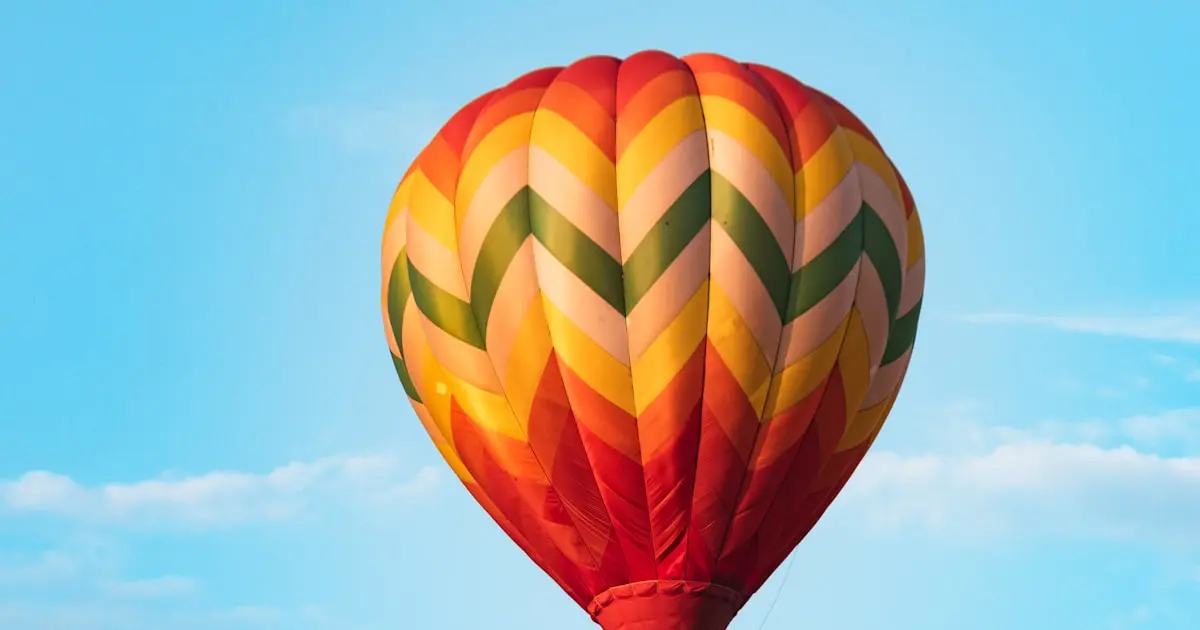
A New Hot Air Balloon Costs €40,000 to €75,000 or More
Buying a hot air balloon is not like buying a car. There is no showroom, no test drive, no financing plan from the manufacturer. A hot air balloon is a certified aircraft, and the purchase price — while modest compared to a fixed-wing plane — is only the beginning. The ongoing costs of insurance, maintenance, storage, inspections and fuel can exceed the purchase price within a few years.
This guide breaks down every cost involved in buying and operating a hot air balloon, from the initial purchase to the hidden expenses that catch first-time buyers off guard. It also explains why, for the vast majority of people who dream of flying, booking a ride is far more practical than owning one.
The Three Major Components and What They Cost
A hot air balloon is a system of three main components, each purchased separately and each with its own lifespan and maintenance requirements.
The Envelope: €25,000 to €45,000
The envelope is the large fabric canopy. It is manufactured from ripstop nylon or polyester, sewn into vertical panels called gores, and coated with silicone or polyurethane to reduce air permeability and UV degradation.
The price depends primarily on size. A standard passenger envelope holding 2,800 cubic metres (approximately 100,000 cubic feet) costs between €30,000 and €45,000 new. Smaller envelopes suitable for two to four passengers start around €25,000. Special-shape envelopes — those designed to look like animals or branded objects — can cost €100,000 or more.
The envelope is the component with the shortest lifespan: 400 to 800 flight hours or approximately 7 to 10 years, whichever comes first. After that, the fabric's strength and porosity fall below airworthiness standards. This means envelope replacement is a recurring cost every owner must plan for. For more on how the envelope works, see our guide on how hot air balloons work.
The Basket (Gondola): €10,000 to €20,000
The basket is made of woven wicker — not as a quaint tradition, but because wicker's flexibility absorbs landing impacts far better than rigid materials. A standard passenger basket for 8 to 16 passengers costs €12,000 to €18,000. Smaller two-person baskets start around €8,000. Extra-large baskets for 20 or more passengers can exceed €25,000.
Baskets are more durable than envelopes and can last 15 to 20 years with proper maintenance. Damaged wicker sections can be repaired individually without replacing the entire basket.
The Burner System: €5,000 to €10,000
The burner heats the air inside the envelope to create lift. Commercial balloons use twin or triple burner systems for redundancy — if one burner fails, the remaining units provide enough heat to control the balloon and land safely. A standard twin-burner system costs €5,000 to €8,000. Triple-burner systems for larger balloons cost €8,000 to €12,000.
Burner systems can last 15 to 20 years with regular servicing, though individual components — valves, hoses, vaporiser coils, igniter systems — need periodic replacement.
Total Purchase Price: New vs Used
New: €40,000 to €75,000+
- Small system (2–4 passengers): €40,000 to €50,000
- Standard system (8–16 passengers): €50,000 to €65,000
- Large system (16–24 passengers): €65,000 to €80,000+
Used: €15,000 to €30,000
The second-hand market is active, particularly in Europe and North America. A used balloon in good condition can cost €15,000 to €30,000. The critical factor is remaining envelope hours. An envelope with 600 of its 800-hour lifespan already used has limited value. Buyers should insist on a full inspection report before purchasing.
The Major Manufacturers
Cameron Balloons (Bristol, United Kingdom) — the world's largest balloon manufacturer, producing over 100 balloons per year. Their quality and resale value are considered the industry benchmark.
Ultramagic (Igualada, Spain) — Europe's second-largest manufacturer, known for competitive pricing and a strong presence in the commercial tourism market. Many operators in Cappadocia and Marrakech fly Ultramagic equipment.
Kubicek Balloons (Brno, Czech Republic) — well-regarded for good value, popular in Central and Eastern Europe, with a growing commercial presence.
All three produce EASA-certified or equivalent-standard equipment.
Ongoing Costs: The Part Most People Underestimate
The purchase price is only the beginning. Recurring costs over a five-year period can easily exceed the original purchase price.
Insurance: €2,000 to €5,000 per Year
Aviation insurance covers hull damage, third-party liability and passenger liability. Expect €2,000 to €3,000 per year for recreational use and €4,000 to €6,000 for commercial operations.
Annual Inspections: €1,000 to €2,000 per Year
As certified aircraft, hot air balloons require annual airworthiness inspections. The inspector checks fabric strength, seams, load tapes, the burner system, fuel lines, cylinders and the basket's structural integrity. This is comparable to a car's annual MOT but far more detailed.
Fuel: €80 to €150 per Flight
A one-hour flight consumes approximately 150 litres of liquid propane. At current European prices, that is roughly €80 to €150 per flight. A pilot who flies 50 times per year spends €4,000 to €7,500 on fuel alone.
Storage: €1,000 to €3,000 per Year
The envelope must be stored dry to prevent mildew that degrades the fabric. If you lack suitable space, commercial storage costs €100 to €250 per month.
Transport: €5,000 to €15,000 (One-Time) Plus Running Costs
A hot air balloon does not fly to the launch site. You need a trailer (€5,000 to €8,000) and a tow vehicle. You also need a chase vehicle that follows the balloon during flight and meets it at the landing site.
Pilot Training: €5,000 to €15,000
A Private Balloon Pilot Licence requires ground school, 16 to 20 hours of practical flight instruction, written examinations and a flight test. A Commercial licence for carrying paying passengers involves additional hours and medical certification.
Five-Year Cost of Ownership
For a private owner flying recreationally — 30 flights per year — the five-year total looks roughly like this:
| Item | Cost |
|---|---|
| Balloon purchase (new, standard size) | €55,000 |
| Insurance (5 years at €2,500/year) | €12,500 |
| Annual inspections (5 years at €1,500/year) | €7,500 |
| Fuel (150 flights at €100/flight) | €15,000 |
| Storage (5 years at €2,000/year) | €10,000 |
| Trailer and transport equipment | €8,000 |
| Pilot training (if needed) | €10,000 |
| Miscellaneous repairs and parts | €5,000 |
| Total over 5 years | €123,000 |
That works out to roughly €820 per flight — not including the value of your time. By contrast, a Classic balloon ride in Marrakech costs €170 per person, with everything handled for you.
Why Booking a Ride Is Smarter Than Buying
Unless you are planning a career in commercial ballooning, buying a balloon is difficult to justify financially. The cost per flight as a private owner is five to ten times higher than booking a ride with a professional operator. You also take on the regulatory burden, the maintenance responsibility, and the logistics of transport and storage.
For most people, the desire to own a hot air balloon is really a desire to fly in one whenever they want. That desire is better satisfied by booking flights at destinations around the world — experiencing different landscapes, different pilots and different conditions — than by investing €100,000+ in a single aircraft.
Fly Over Marrakech Instead
A sunrise balloon flight over the Atlas Mountains and the Palmerie costs a fraction of what it would take to buy your own balloon — and you do not need a pilot's licence, a trailer or insurance. Our Classic Flight starts at 1,700 Dhs (approximately €170) per person and includes hotel transfers, the sunrise flight, a full Moroccan breakfast and a flight certificate. The Private Flight reserves the entire balloon for your group at 5,000 Dhs total.
Let someone else handle the maintenance. You handle the camera.