
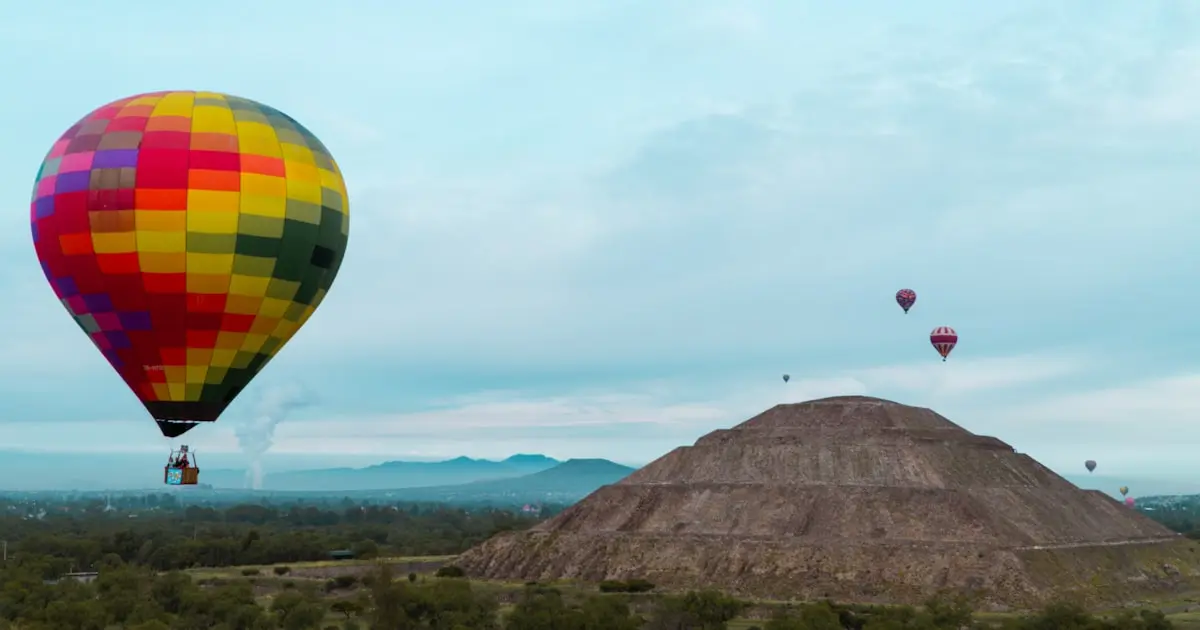
"How dangerous is it, really?" It is the question that every balloon operator hears from prospective passengers, and it deserves an honest, detailed answer. Not a dismissive "it is perfectly safe" and not an alarming list of everything that could theoretically go wrong, but a realistic assessment of what the actual risks are and how the industry manages them.
The headline is reassuring: hot air ballooning is statistically one of the safest forms of aviation. But it is not risk-free — no form of travel or recreation is. What makes ballooning genuinely safe is not the absence of hazards but the rigorous systems in place to manage them. Here is what those hazards are and how they are mitigated.
The Statistical Picture
Before diving into specific risks, it helps to understand the scale. Across the hundreds of thousands of commercial balloon flights conducted worldwide each year, the rate of serious incidents is extremely low. Our detailed analysis of hot air balloon accident statistics covers the numbers in full, but the key takeaway is this: you are statistically at greater risk during the car journey to the launch site than during the flight itself.
That said, statistics are population-level data. What matters to you as an individual passenger is not the average risk across all operators — it is the specific risk of the specific flight you are about to take, with the specific operator you have chosen. And that is where your choices make a real difference.
The Real Risks, Ranked
1. Weather Changes Mid-Flight
The risk: Weather is the single most significant variable in balloon safety. Conditions can change during a flight — a wind shift, an unexpected thermal, a faster-than-forecast increase in wind speed. A balloon cannot fly back to its launch site, cannot speed up to outrun weather, and has limited ability to change direction. If conditions deteriorate, the pilot's primary option is to land as quickly and safely as possible.
How it is mitigated: Reputable operators use a conservative go/no-go decision process before every flight. They check multiple weather sources, assess wind speed and direction at multiple altitudes, and have strict maximum thresholds that they will not exceed. If conditions are marginal, they cancel. Our guide on what happens when your flight is cancelled explains this process in detail.
The reason balloon flights happen at sunrise is specifically because morning conditions are the most stable and predictable. The atmosphere has not yet been stirred by solar heating, winds are at their lightest, and weather changes are least likely. Flying at dawn is not a tradition — it is a safety strategy.
Additionally, experienced pilots are trained to read the sky continuously during flight. They monitor cloud development, watch for signs of increasing thermal activity, and adjust their flight plan accordingly. A good pilot will choose to land early rather than push into uncertain conditions.
2. Power Line Contact
The risk: Overhead power lines are one of the most serious hazards a balloon can encounter. They are difficult to see from the air, particularly in the low-angle light of early morning or against complex backgrounds like tree lines or urban areas. Contact with power lines can cause electrocution, fire, or both.
How it is mitigated: Experienced pilots flying established routes know the location of every power line in their operating area. They plan their descent corridors to avoid known power line routes, and they maintain constant visual vigilance during the approach phase of every flight.
In areas like the Marrakech region, the rural landscape where balloon flights operate has significantly lower power line density than suburban or urban areas, reducing this risk considerably. The flat, open terrain also makes it easier to identify lines from a distance.
Pre-flight briefings for passengers always include instructions to adopt the landing position — crouching in the basket with hands gripping the handles — which protects passengers in the unlikely event of contact with any obstacle during landing.
3. Hard Landings
The risk: Landing a hot air balloon is not like landing an aeroplane on a smooth runway. The pilot selects a field or open area and brings the balloon down, often with some residual horizontal movement. Depending on wind conditions at ground level, the landing can range from a gentle, stand-up arrival to a bumpy, basket-tipping "drag" across the ground.
Hard landings are by far the most common source of minor injuries in ballooning. A passenger who is not properly braced can be knocked against the basket wall, resulting in bruises, sprains, or very rarely, a fracture.
How it is mitigated: The pre-flight safety briefing is the primary defence. Passengers are instructed to adopt the landing position well before touchdown: facing the direction of travel, knees bent, back against the basket wall, hands firmly gripping the rope handles or basket rim. This position absorbs the impact through the legs and keeps the body stable.
The pilot also manages the landing by choosing the best available site, timing the approach to minimise horizontal speed, and using the deflation system to collapse the envelope quickly after touchdown. In calm conditions, landings are often gentle enough that passengers barely feel them. It is only in moderate wind conditions that the technique becomes important — and in those conditions, the safety briefing really matters.
4. Equipment Failure
The risk: Like any mechanical system, balloon equipment can fail. The burner could malfunction, a fuel line could develop a leak, the envelope fabric could tear, or a structural component of the basket could break. Any of these could affect the safety of the flight.
How it is mitigated: Commercial balloons are required to undergo regular airworthiness inspections, similar to the annual MOT for cars but far more rigorous. The envelope is inspected for fabric degradation, the burner system is tested, fuel lines are checked, and the basket structure is examined.
Critically, most commercial balloon systems have built-in redundancy. The dual-burner system is the most important example: if one burner fails, the other continues to function, providing full control over altitude. The pilot can complete the flight and land normally on a single burner.
Even in the extreme scenario of total burner failure, a balloon does not plummet. The hot air inside the envelope cools gradually, and the balloon descends slowly — far more slowly than a parachute. The pilot can still use the vent at the top of the envelope to control the rate of descent. Our article on how hot air balloons work explains these systems in detail.
The Regulatory Framework
Hot air ballooning is not an unregulated cowboy operation. It is a licensed, inspected, and insured form of commercial aviation, subject to strict oversight:
- Pilot licensing: Commercial balloon pilots must hold a specific pilot licence requiring extensive training, written examinations, and a minimum number of supervised flight hours. In many jurisdictions, they must also hold a current medical certificate.
- Airworthiness inspections: Every commercial balloon must hold a valid airworthiness certificate, requiring annual inspections of the envelope fabric, burner system, fuel tanks, basket structure, and all connecting hardware. Between formal inspections, the pilot conducts a thorough pre-flight check before every flight.
- Passenger insurance: Reputable operators carry liability insurance that covers passengers in the event of injury. This is often a legal requirement with minimum coverage amounts set by the aviation authority.
Questions to Ask Your Operator Before Booking
You do not need to be an aviation expert to assess whether an operator takes safety seriously. Ask how long they have been operating, what their pilot's qualifications and flight hours are, what their weather cancellation policy is, whether they have dual burners (they should), and whether they carry passenger liability insurance. Operators who answer confidently and cancel readily for marginal weather are the ones prioritising your safety.
Our complete safety guide for Marrakech balloon rides covers these considerations in more detail.
Why the Cheapest Option Can Be a Bad Idea
In competitive tourist destinations, it can be tempting to choose the cheapest option. However, safety costs money — well-maintained equipment, experienced pilots, comprehensive insurance, and conservative weather policies all add to an operator's costs. An operator who significantly undercuts the competition may be cutting corners where it matters.
But if a price seems too good to be true, it is worth asking why. The difference in price between a solid, safety-conscious operator and a bargain option is usually modest — and it is the best investment you will make in your holiday.
Marrakech Operators' Standards
Ballooning in Marrakech benefits from favourable geography (flat, open terrain with few obstacles), a predictable semi-arid climate that produces reliable morning conditions, experienced pilots who fly the same area year-round, and regulatory oversight from Morocco's aviation authority. Read what past passengers have said in our collection of Marrakech balloon ride reviews.
A Balanced Perspective
Hot air ballooning involves real risks, but those risks are well understood, actively managed, and statistically very low. The greatest risk factor is the operator you choose. A well-run operation with experienced pilots, maintained equipment, and safety-first weather policies reduces your personal risk to a level comparable to or lower than many everyday activities you do without a second thought.
If your hesitation is based on a perception that ballooning is dangerous, the evidence suggests otherwise. It is one of the gentlest, safest, and most serene ways to see the world from above.
Take to the Skies with Confidence
Understanding the risks — and how they are managed — is the best way to approach your first balloon flight with confidence rather than anxiety. When you choose a reputable operator, fly in the recommended morning window, and listen to your safety briefing, you are setting yourself up for an experience that is overwhelmingly likely to be the highlight of your trip.
Discover why a hot air balloon ride over Marrakech is consistently rated as one of the best things to do in Morocco, and check the flight schedule to find your date. Sometimes the best adventures are the ones that feel effortless — and that is exactly what a sunrise balloon flight delivers.
See the full line-up of sunrise balloon flights over Marrakech, with prices in both dirhams and euros.