
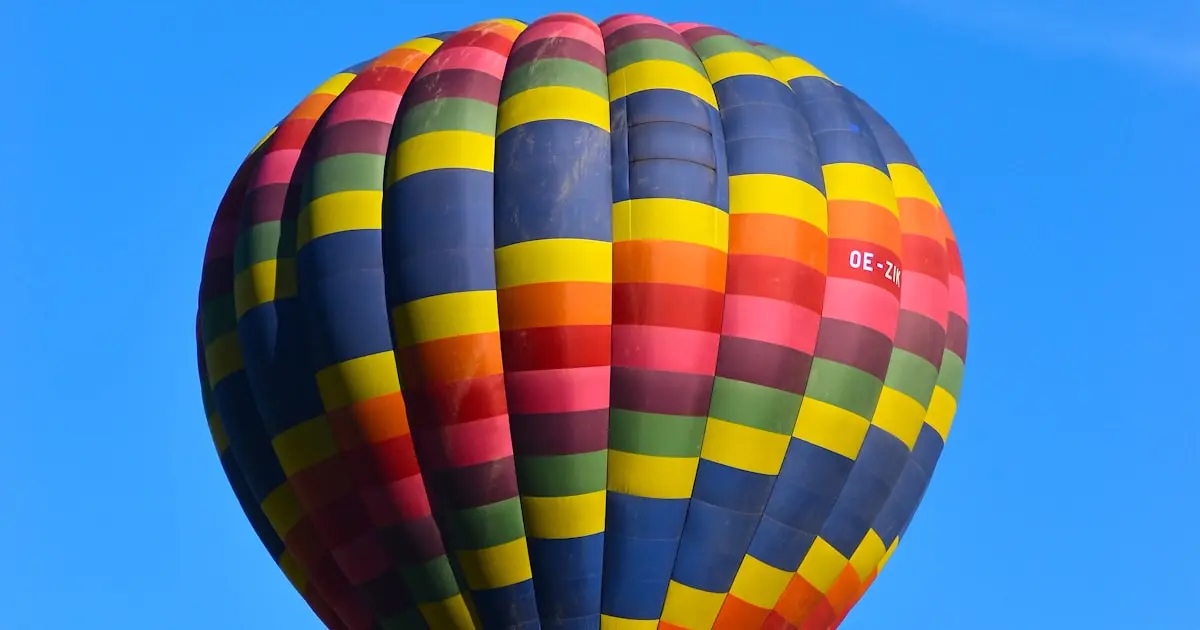
A hot air balloon looks deceptively simple — a big fabric bag, a wicker basket, and a flame. But the reality of manufacturing one is a painstaking process that blends aerospace engineering with centuries-old craft techniques. Every balloon that lifts off over the Atlas Mountains at dawn is the product of thousands of hours of design, cutting, sewing, weaving, and testing.
If you have ever wondered how hot air balloons work and thought about what goes into building one, this guide walks you through every stage of manufacture — from the first digital sketch to the moment a completed balloon earns its airworthiness certificate.
The Design Phase
Modern hot air balloon design begins on a computer screen. Engineers use CAD (Computer-Aided Design) software to model the envelope — the fabric shell that holds the heated air. The software calculates the volume needed for the desired payload capacity, factoring in the weight of the basket, burner system, fuel, pilot, and passengers.
The envelope's shape is determined by dividing it into vertical panels called gores. A standard balloon uses 24 gores, though this number can vary from 16 to 36 depending on the size and design. Each gore is a long, tapered panel that runs from the crown (top) to the throat (bottom opening). The CAD model produces precise templates for every panel, accounting for fabric stretch, seam allowances, and the three-dimensional curvature of the finished shape.
For a typical passenger balloon with a volume of around 2,800 cubic metres (roughly 100,000 cubic feet), the design phase also determines where reinforcement tapes will run, where the parachute valve sits at the crown, and how the load will be distributed through the structure.
Fabric Selection
The choice of fabric is critical. Most manufacturers use ripstop nylon for the main envelope body. Ripstop nylon is woven with a reinforced grid pattern — thicker threads at regular intervals — that prevents small tears from spreading. It is lightweight (typically 40–60 grams per square metre), strong, and flexible enough to be packed and unpacked hundreds of times without degrading.
The skirt or throat — the section closest to the burner flame — is made from Nomex, a fire-resistant aramid fabric developed by DuPont. Nomex can withstand temperatures above 370°C without melting or combusting. Without it, the intense heat from the burner would quickly destroy standard nylon.
Some manufacturers use polyester for certain balloon models. Polyester offers better UV resistance than nylon but is slightly heavier. The trade-off depends on the balloon's intended use and the climate it will fly in. Balloons operating in intensely sunny environments — like those flying over the Palmerie near Marrakech — benefit from enhanced UV protection.
Cutting the Panels
Once the fabric is selected, the gore templates are transferred from the CAD model to cutting instructions. Large manufacturers use laser cutting machines that slice through multiple layers of fabric with precision measured in millimetres. The laser also seals the cut edges of nylon, preventing fraying.
Smaller workshops and specialist manufacturers still cut panels by hand using templates laid over the fabric on long cutting tables. Each gore is a tapered shape — widest at the equator (the balloon's widest point) and tapering to narrow strips at the crown and throat. A single envelope requires between 1,000 and 1,500 square metres of fabric, roughly the area of four tennis courts.
Sewing the Envelope
Sewing is where the balloon truly comes together, and it is the most labour-intensive stage of manufacture. Industrial sewing machines stitch the gores together using high-strength polyester thread, typically with a double-lap felled seam that folds the raw edges inside for durability and air retention.
The most structurally important element is the load tape system. Load tapes are strong webbing strips (usually nylon or Kevlar) sewn into every vertical seam where two gores meet. These tapes run the full length of the envelope from crown to throat and carry the entire structural load — the weight of the basket, passengers, and fuel hanging beneath the balloon is transferred through the load tapes, not through the fabric panels themselves.
Horizontal reinforcement bands are sewn at intervals around the envelope's circumference. These bands help the balloon maintain its shape under load and distribute stress evenly.
A skilled team of sewers takes two to four weeks to complete a standard envelope. Every seam must be consistent, every load tape aligned precisely. A poorly sewn seam could create a stress point that fails during flight — so quality control at this stage is rigorous.
Coating for Durability
After sewing, the finished envelope receives a protective coating. Most manufacturers apply a silicone or polyurethane coating to the interior surface of the fabric. This coating serves two purposes.
First, it reduces porosity — the rate at which air seeps through the weave of the fabric. Lower porosity means the envelope retains heated air more efficiently, improving fuel economy and flight performance. Second, the coating protects against UV degradation. Ultraviolet radiation from the sun breaks down nylon fibres over time, and the coating acts as a barrier.
The coating is typically applied by spraying or roller application, then heat-cured. Some high-end envelopes receive multiple coats for maximum longevity.
Basket Construction
The basket — formally called a gondola — is perhaps the most surprising part of a hot air balloon to manufacture. In an age of carbon fibre and aluminium, balloon baskets are still made from wicker and rattan, hand-woven over a structural frame of steel or aluminium tubing.
Why wicker? The material has three qualities that modern alternatives struggle to match simultaneously. It absorbs landing impact — wicker flexes on contact with the ground, cushioning passengers during landings that can be firm. It is remarkably light for its strength. And it is repairable — a damaged section can be re-woven without replacing the entire basket.
A standard four-passenger basket takes between 80 and 120 hours to weave by hand. The weaver builds up layers of rattan cane over the frame, creating a structure that is both flexible and extremely strong. The interior is typically lined with padded suede along the top rail for passenger comfort, and the floor is woven wicker over a plywood base.
Larger baskets — those carrying 12 to 20 passengers on commercial flights like those in Marrakech — include internal partition walls that divide the basket into sections. These partitions give passengers something to brace against during landing and distribute weight more evenly.
If you are curious about the full anatomy, our guide to the parts of a hot air balloon covers every component in detail.
The Burner System
The burner is the balloon's engine, and it is built to exacting standards. The main structure is stainless steel, chosen for its resistance to the extreme heat it must withstand flight after flight.
Key components include the blast valve (the main burner, operated by pulling a trigger — this produces the loud roar passengers hear during flight), the metering valve or whisper burner (a quieter, continuous flame for gentle altitude adjustments), the pilot light (a small always-on flame that ignites the main burner instantly), and the vaporiser coil (a tube that converts liquid propane from the fuel tanks into gas before it reaches the burner jet).
The burner connects to propane fuel tanks secured in the corners of the basket. A typical flight carries two to four 40-litre tanks, providing roughly 40 to 90 minutes of fuel depending on conditions and passenger load. Understanding how balloons are steered and how the burner controls altitude is essential for appreciating why the system must be so reliable.
Assembly and Testing
Once all components are complete, the balloon is assembled for the first time. This is a moment of truth — everything must fit together precisely.
The testing protocol is thorough:
- Load testing: The basket and flying wires (the steel cables connecting basket to envelope) are subjected to loads far exceeding normal operating weight to verify structural integrity.
- Inflation test: The envelope is inflated fully — first with cold air using a powerful fan, then with heated air from the burner — to check for air leaks, proper shape, and correct parachute valve operation.
- Tethered test flight: The complete balloon is inflated and lifted to its full height while secured by tether lines. The pilot tests all controls, instruments, and safety systems.
Any defects found during testing are corrected and the tests repeated. Only when every system performs flawlessly does the balloon move to certification.
Certification
Before a balloon can carry passengers, it must receive an airworthiness certificate from the relevant aviation authority — the CAA in the United Kingdom, EASA in Europe, or the FAA in the United States. The manufacturer assigns a serial number and produces a detailed technical manual covering the balloon's specifications, operating limitations, and maintenance schedule.
The certification process involves submitting design documentation, test results, and manufacturing records. Type-certified balloon designs (approved models) can be produced in series, while one-off or special shape balloons require individual certification.
Major Manufacturers
A handful of companies dominate global balloon production:
- Cameron Balloons (Bristol, United Kingdom) — the world's largest manufacturer, having built over 30,000 balloons since 1971. Many of the balloons you see flying over Marrakech, Cappadocia, and at festivals worldwide are Cameron-built.
- Ultramagic (Igualada, Spain) — Europe's second-largest manufacturer, known for innovative designs and special shapes.
- Kubicek Balloons (Brno, Czech Republic) — a major European manufacturer supplying commercial operators worldwide.
- Lindstrand Technologies (United Kingdom) — founded by record-breaking balloonist Per Lindstrand, known for high-performance and record-setting designs.
How Long Does a Balloon Last?
A well-maintained envelope has a lifespan of 400 to 800 flight hours or 10 to 15 years, whichever comes first. The fabric degrades over time from UV exposure, heat cycling, and the mechanical stress of repeated inflation and deflation. Annual inspections are mandatory, and the envelope undergoes a porosity test to ensure it still retains air efficiently.
Baskets last considerably longer — 20 years or more with periodic re-weaving and maintenance. Burner systems are overhauled at regular intervals but can serve for decades.
Special Shape Balloons
Those whimsical balloons shaped like animals, buildings, or cartoon characters at festivals require dramatically more work than standard envelopes. A special shape balloon may contain ten times more fabric panels than a conventional design, with complex three-dimensional geometry that challenges even experienced pattern-makers.
Each panel must be individually designed, cut, and sewn. Internal baffles and tethers maintain the shape during inflation. The engineering is remarkable — these balloons must still fly safely and meet the same safety standards as any conventional balloon.
The history of hot air ballooning stretches back to 1783, but the manufacturing process has evolved enormously since those first linen and paper envelopes. Today's balloons are marvels of engineering that combine cutting-edge materials science with handcraft traditions stretching back centuries.
Experience the Finished Product Over Marrakech
Now that you know the craftsmanship behind every balloon, why not experience the result firsthand? Our sunrise flights over the Atlas Mountains and the Palmerie let you appreciate the engineering from inside the basket — floating silently above Morocco's most stunning landscape in a machine built by hand.
Book your Marrakech balloon flight today and see where fabric, flame, and craftsmanship meet the morning sky. Check our price guide and first-time tips to plan your experience.
When you are ready, you can book directly with the operator rather than through a reseller.