
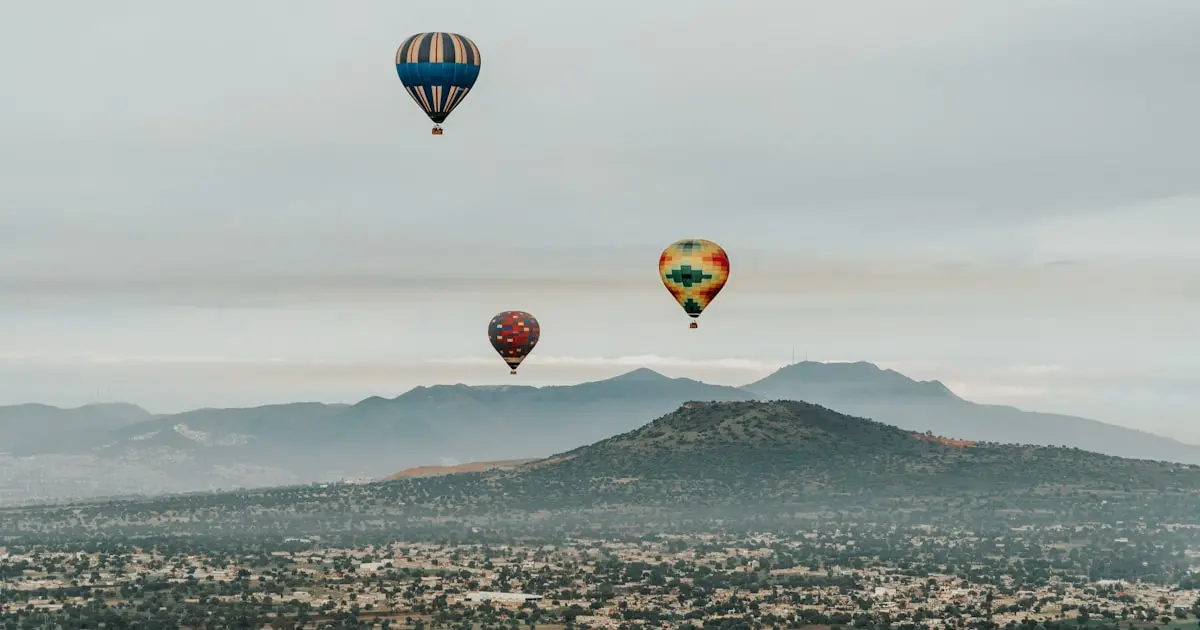
It is a question that sounds simple but turns out to be surprisingly difficult to answer precisely: how many hot air balloons exist in the world? There is no single global registry, no international database, and no governing body that tracks every balloon from manufacture to retirement. But by piecing together national aviation authority records, manufacturer output data, and industry estimates, we can build a reliable picture.
The short answer is somewhere between 7,000 and 10,000 registered hot air balloons worldwide. The longer answer — involving who owns them, where they fly, and how the industry is evolving — is far more interesting.
The Global Estimate
The figure of 7,000 to 10,000 comes from aggregating the registration databases of major aviation authorities and adding estimates for countries with less transparent record-keeping. This number includes both privately owned sport balloons and commercially operated tourism balloons. It does not include tethered advertising balloons, military aerostats, or unregistered ultralight balloons in countries where registration is not mandatory.
Some caveats: not every registered balloon is actively flying. Balloons have a finite lifespan — envelopes typically last 400 to 500 flight hours or 10 to 15 years — and some registered aircraft are grounded, awaiting repair, or stored. The number of balloons in active use on any given day is substantially lower than the total registered fleet.
Breakdown by Country
United States — Approximately 3,500
The United States has by far the largest fleet of registered hot air balloons in the world. The Federal Aviation Administration (FAA) maintains detailed records of all certificated aircraft, and lighter-than-air free balloons consistently number around 3,500. This dominance reflects the country's size, its favourable flying conditions in many states, a strong tradition of recreational ballooning dating back to the 1960s when Ed Yost invented the modern propane balloon, and relatively accessible licensing requirements.
American ballooning is split roughly 60/40 between private recreational pilots and commercial tour operators. The busiest commercial markets include Napa Valley (California), Temecula (California), Albuquerque (New Mexico), Park City (Utah), and Orlando (Florida).
United Kingdom — Approximately 1,000
The UK has a thriving balloon community despite weather that limits the flying season to roughly April through October. The Civil Aviation Authority registers around 1,000 balloons, making Britain the second-largest balloon nation in the world relative to the fleet size. The Bristol International Balloon Fiesta, held annually since 1979, is one of Europe's premier balloon events and a major driver of public interest in the sport.
British ballooning leans more heavily toward private sport flying than commercial tourism, partly because the weather makes daily commercial operations unreliable. Many UK pilots fly recreationally on weekends, supplementing their flying with festival appearances and occasional commercial work.
France — Approximately 800
France holds a special place in ballooning history — the Montgolfier brothers launched the first manned flight from Paris in 1783 — and the tradition continues. Around 800 balloons are registered with the Direction Generale de l'Aviation Civile (DGAC). The Lorraine Mondial Air Ballons festival, held every two years near Metz, attracts over 400 balloons and is the largest balloon gathering in the world.
French ballooning is particularly strong in the Loire Valley, Provence, and the Dordogne, where scenic landscapes and a strong tourism infrastructure support both recreational and commercial flying.
Germany — Approximately 500
Germany's Luftfahrt-Bundesamt registers roughly 500 hot air balloons. The country has a well-organised balloon sport community, with numerous clubs and regional competitions. Commercial tourism is less dominant than in the US or Turkey, but scenic flights over the Bavarian Alps, the Black Forest, and the Rhine Valley are popular.
Australia — Approximately 300
Australia's vast landscapes, reliable weather, and strong adventure tourism sector support around 300 registered balloons. The Yarra Valley near Melbourne, the Hunter Valley near Sydney, and the outback around Alice Springs are the primary commercial markets. The Australian ballooning season is long — essentially year-round in many regions — giving operators a commercial advantage over European counterparts.
Turkey — Approximately 250
Turkey's balloon fleet is modest in absolute numbers but punches far above its weight in commercial impact. The vast majority of these 250 or so balloons operate in Cappadocia, the volcanic landscape in central Anatolia that has become the single most famous ballooning destination on earth.
Spain — Approximately 200
Spain registers around 200 balloons, with commercial operations concentrated in Catalonia, Mallorca, and Andalucia. The country's warm climate and diverse landscapes make it a natural fit for balloon tourism, and the industry has grown steadily over the past decade.
Other Notable Countries
Morocco, Kenya, Tanzania, Myanmar, Egypt, and New Zealand each have smaller but significant balloon fleets, primarily serving the tourism sector. Morocco's fleet is growing rapidly, driven by demand for sunrise flights over the Atlas Mountains and the Palmerie near Marrakech.
The Busiest Commercial Locations
Total fleet size by country tells only part of the story. The real measure of ballooning activity is flight density — how many balloons launch in a single location on a given morning.
Cappadocia, Turkey
On a peak-season morning, 100 to 150 balloons can be airborne simultaneously over the fairy chimney landscape. An estimated 500,000 passengers fly annually, generating over $100 million in revenue for the local economy. Cappadocia is, by any measure, the commercial ballooning capital of the world.
Luxor, Egypt
Several dozen balloons launch over the Nile's West Bank each morning, carrying tourists above the Valley of the Kings and the ancient temples. Luxor's balloon industry has faced setbacks — most notably a fatal accident in 2013 that led to temporary groundings and tighter regulation — but has rebounded and remains one of Africa's busiest markets.
Marrakech, Morocco
Marrakech is one of the fastest-growing balloon tourism markets globally. Near-perfect flying conditions throughout the year, dramatic scenery (the snow-capped Atlas Mountains, the ancient Palmeraie, and scattered Berber villages), and competitive pricing have attracted an increasing number of operators and passengers. The market's growth trajectory suggests it will become one of the world's top five balloon tourism destinations within the next decade.
Serengeti and Masai Mara
Balloon safaris over the East African plains offer a unique product: wildlife viewing from the air. Operators in Tanzania's Serengeti and Kenya's Masai Mara fly year-round (with peak demand during the Great Migration), charging premium prices that reflect the extraordinary nature of the experience.
Bagan, Myanmar
Flights over the 2,000-plus ancient temples of Bagan have made this one of the most iconic ballooning images in the world. The industry is smaller than Cappadocia or Luxor but growing, supported by Myanmar's increasing visibility as a tourist destination.
The Industry in Numbers
Market Size
Global commercial balloon tourism is estimated at $250 to $300 million per year. This figure covers passenger ticket revenue and does not include ancillary spending (photography packages, transfers, accommodation booked specifically for balloon flights). Including these, the total economic impact is likely closer to $500 million.
Growth Trends
The industry has grown steadily since 2010, driven by social media (balloon flights are among the most photographed travel experiences), the expansion of adventure tourism, and the entry of new destinations into the market. Cappadocia's passenger numbers roughly tripled between 2010 and 2020, and Marrakech has seen similar growth rates from a smaller base.
Manufacturers
The global balloon manufacturing industry is concentrated among a handful of specialist firms. Cameron Balloons (Bristol, UK) is the world's largest manufacturer, having produced over 12,000 envelopes since 1971. Ultramagic (Igualada, Spain) and Kubicek Balloons (Brno, Czech Republic) are other major producers. Lindstrand Technologies, Aerostar, and Firefly Balloons serve the American and Australian markets.
A new standard-shape balloon costs between €80,000 and €150,000. Special-shape balloons — custom envelopes shaped like animals, products, or characters — can cost €250,000 to €500,000 or more.
Festival Statistics: Where Balloons Gather
Balloon festivals offer the most spectacular concentrations of balloons anywhere in the world. The largest include:
- Albuquerque International Balloon Fiesta (New Mexico, USA) — 500+ balloons over nine days. The largest balloon event in the world, attracting nearly 900,000 spectators.
- Lorraine Mondial Air Ballons (Chambley, France) — 400+ balloons. Held every two years, it holds the world record for the most balloons launched simultaneously (456 in 2017).
- Bristol International Balloon Fiesta (UK) — 130+ balloons over four days. Free to attend, drawing crowds of 500,000.
- Saga International Balloon Fiesta (Japan) — 100+ balloons. Asia's largest balloon event.
- Canberra Balloon Spectacular (Australia) — 30+ balloons launching from the lawns of Parliament House.
These events serve as rallying points for the global balloon community, bringing together private pilots, commercial operators, manufacturers, and hundreds of thousands of spectators. They are also where many people first become fascinated by ballooning — and where future balloon pilots catch the bug.
Fun Facts About the Global Fleet
- Largest balloon ever built: The Cameron A-1600, with a volume of 45,000 cubic metres — large enough to contain several houses.
- Most expensive balloon: Special-shape envelopes for major corporations have reportedly cost over $500,000.
- Oldest active balloon club: Several clubs claim this distinction, with roots in the early 1960s following Ed Yost's invention of the modern sport balloon.
- Highest balloon flight: Vijaypat Singhania reached 21,027 metres (68,986 feet) over Mumbai in 2005 — higher than most commercial jets fly.
- Longest balloon flight: Steve Fossett's solo circumnavigation in 2002 covered 33,195 kilometres in 13 days.
Marrakech: A Growing Destination in the Global Fleet
As the worldwide fleet grows and new destinations emerge, Marrakech is establishing itself as one of the premier places on earth to experience a hot air balloon flight. The combination of year-round flying conditions, diverse landscapes visible from the basket, and excellent value compared to other destinations makes it uniquely compelling.
Whether you are drawn to ballooning by the statistics, the history, or simply the desire to see the world from a different perspective, Marrakech delivers an experience that rivals — and in many ways surpasses — the most famous ballooning destinations on the planet. Read what passengers say in our Marrakech balloon ride reviews.
See Marrakech From Above
Join the thousands of passengers who fly over Marrakech each year and add your story to the growing chapter of Moroccan ballooning. Book your sunrise hot air balloon flight today and experience one of the world's most beautiful landscapes from the most peaceful vantage point imaginable.
Curious what it costs? See our flights and prices — no third-party booking fees.